
Skip to content
  • Written quotes
  • Local electricians

Home EV charging in Sacramento, CA

EV charger installation in Sacramento for Tesla and other cars

A Level 2 charger needs a safe dedicated circuit. We check your panel first, explain the options and quote the full job in writing.

(916) 555-0194 Call an electrician
  • Panel capacity checked first
  • Tesla and universal chargers
  • Written quote before work starts
Get my free electrical quote

Step 1 of 3

What do you need?

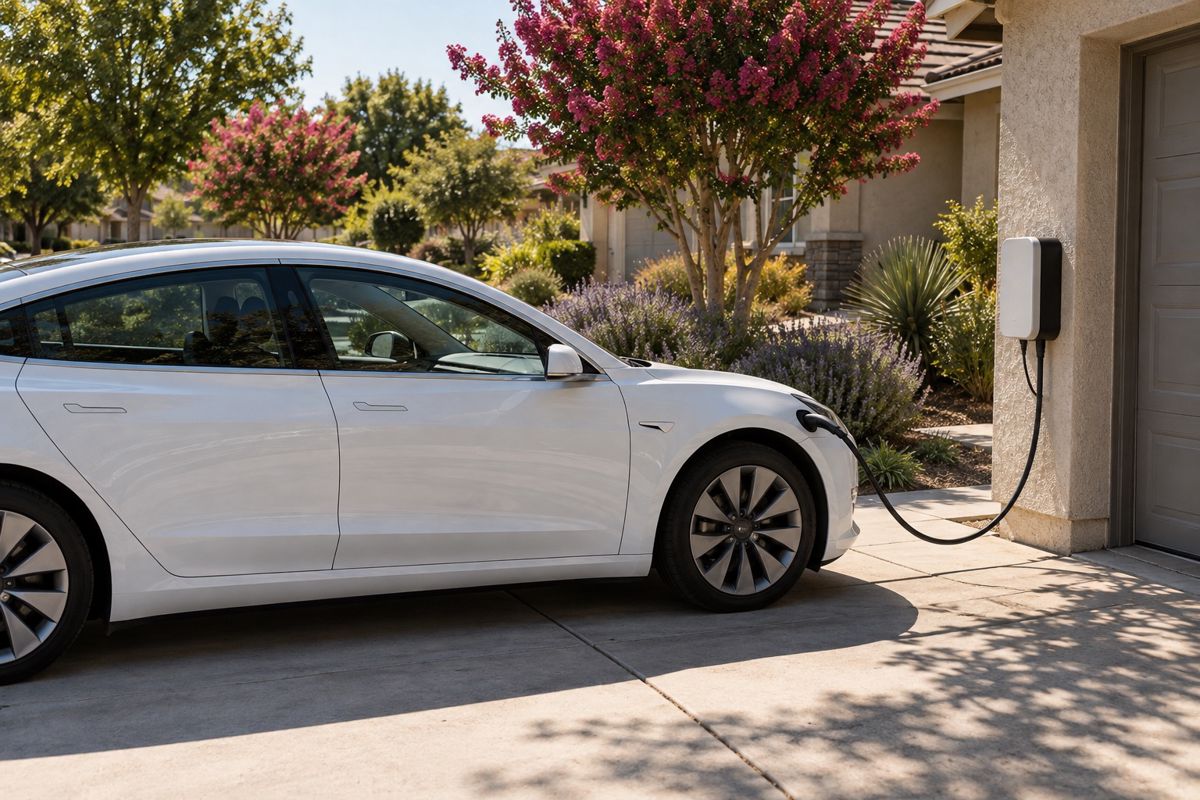
EV charger on a garage wall with an electric car charging

What does EV charger installation involve?

Every electric car can charge from a regular wall outlet, but it is slow. Level 1 charging adds only a few miles of range an hour. Level 2 charging uses a 240 volt circuit like an electric dryer or oven and can refill most cars overnight. Most people who ask about EV charger installation Sacramento drivers can book are asking for a Level 2 setup.

The job usually means running a dedicated circuit from the panel to the garage or driveway, adding a double-pole breaker, and installing either a hardwired charger or a heavy-duty outlet. A Tesla Wall Connector, a universal J1772 unit and many networked chargers all follow the same basic steps. Many newer cars from other makers use the Tesla-style port or an adapter, so check what yours needs before you buy a unit.

Plan on a permit and an inspection. The charger must be matched to the circuit, the wire size and the breaker, and it should be listed for safety by a recognized test lab.

Can my Sacramento home handle a Level 2 charger?

This is the first question to settle. A charger can draw as much power as a large oven running for hours. Homes with 100 amp service, an older panel, central air and an electric dryer may not have room on paper, even if the panel looks fine.

The electrician does a load calculation that adds up the house's demand and compares it with the service size. There are three typical outcomes:

  • There is enough spare capacity, and the charger goes on a new circuit
  • Capacity is tight, so a smaller charger or a load management device is used to share power safely
  • The service is too small, and a panel upgrade comes first

Sacramento summers matter here. Air conditioning load peaks in the same evening hours when many people plug in, so ask how the calculation accounts for it. Homes with solar and a battery have more options, but the circuit and breaker still must be sized correctly.

Where is the best place to put the charger?

Closer is cheaper and neater. The shorter the run between panel and charger, the less wire, conduit and labor. A charger on the garage wall next to the panel is the simplest case. Many Sacramento garages are attached, with the panel on the outside wall or inside near the door, which helps.

If the car parks in the driveway or at a carport, the wire has to travel farther, sometimes through a stucco wall, across an attic or in a trench. Outdoor chargers should be rated for weather. Direct afternoon sun in July can heat a wall a great deal, so a shaded wall is a better choice where possible. Keep the cable reach in mind. It should reach the charging port without stretching or lying across the walkway.

Think about future cars too. A second vehicle may mean a second charger or a circuit that can be shared. It is cheaper to plan that now than to open the wall twice.

No two charger jobs cost the same. These factors set the price:

  • Distance from the panel to the charger
  • Whether the panel has room, or needs work first
  • Wall type, such as stucco, finished drywall or concrete, and whether trenching is needed
  • Hardwired charger or outlet, and which charger you buy
  • Permit and inspection fees in your city or county

Incentives change often. SMUD and the state have offered rebates and special EV rates in the past, and those rates can reward charging at night or at set times of day. Ask the utility and check current programs before you buy. We cannot promise any rebate, and you should confirm the rules yourself.

We quote in writing before work starts. If a panel or wiring problem is found, it is listed as a separate item so you can see what is for the charger and what is for the house. Older wiring is covered on our rewiring page.

How long does the install take, and what happens that day?

Many installs take a few hours to a day once the permit is in place. A short run to a garage wall may be done within half a day. A long run, a new panel or trenching can stretch it out.

On the day, power to part of the house is turned off, the circuit and mounting are installed, and the charger is connected and tested, with your car where possible. You are shown how the app or settings work, such as setting the maximum current or a charging schedule. If an inspection is required, it is arranged after the work is complete.

Call before you buy a charger so the unit and the circuit match. Ask for a written quote that names the breaker size and the wire. For a quick tour of what else we do, see the home page.

Written quotes Local electricians Fast response Tidy work

Request ev chargers

Tell us what you need and we call you back.

No obligation.

Step 1 of 3

What do you need?

Questions about electrical in Sacramento

Should I choose a plug-in outlet or a hardwired charger?

A 240 volt outlet can be cheaper and lets you swap the charger later. A hardwired unit avoids the plug connection, which carries heavy current for hours and can wear and heat over time. Many electricians prefer hardwired for that reason. Ask what the charger maker and local rules allow, and choose based on your setup.

What size breaker does an EV charger need?

Chargers are continuous loads, so the breaker is sized at 125 percent of the charger's current. A 32 amp charger uses a 40 amp breaker, a 40 amp charger uses a 50 amp breaker, and a 48 amp charger uses a 60 amp breaker. Your electrician confirms the wire size and the final setup for your panel.

Do I need a permit to install a home charger?

Usually, yes. A new 240 volt circuit is a permitted change in most places, and an inspection confirms that the work is safe. Rules differ between the city and the county, so ask your electrician what applies at your address. Keep the inspection record for insurance and resale.

Can a 100 amp panel support an EV charger?

Sometimes. It depends on what else the house runs and on the load calculation. Many 100 amp homes can take a smaller charger or one with load management. Others need a panel upgrade first. Do not guess. Ask for the calculation in writing so you can see how the answer was reached.

How much will a charger add to my electric bill?

It depends on how much you drive, your car's efficiency and your utility rate plan. Time-of-use or EV rates can lower the cost if you charge when power is cheaper. Check current SMUD or PG&E options, whichever serves you, before you choose a plan or buy equipment.

Can I install a charger in a condo or an HOA home?

California law generally protects the right to install a charger, subject to reasonable rules about where and how. You will usually need written approval and may be responsible for costs and insurance. Check your association's rules and speak to the board early, then ask your electrician about the location.

How it works

Call or request a quote

Tell us what is wrong or what you need.

Clear price

We explain the work and the cost before starting.

Safe, tidy work

Done properly, tested and cleaned up.

Ready when you are. Call now or request a quote online.