
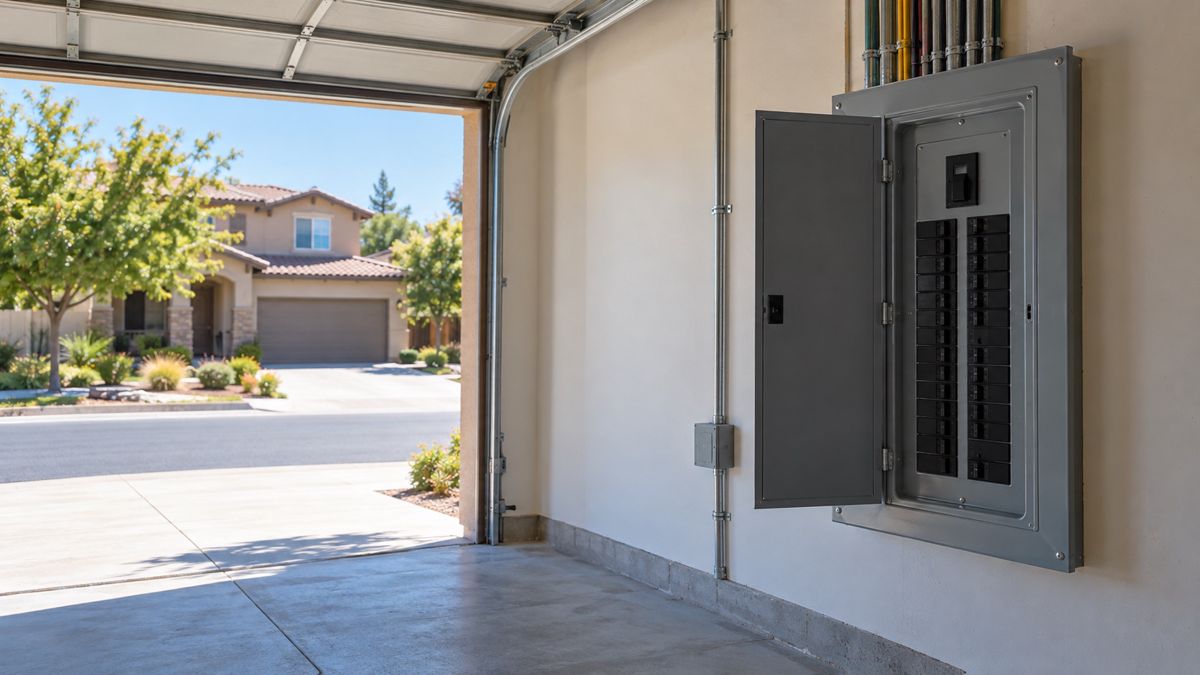
Across the United States, many 200 amp panel upgrades land somewhere around $2,000 to $5,000. In Sacramento, plan for the middle to upper part of that range, and for more when the utility side, trenching or wall repair is involved. Treat these numbers as a rough market guide, not a quote from this business. The only real price is a written quote after someone has looked at your panel.
The rest of this article explains what you are paying for, what moves the price, and how to compare quotes without getting lost in the details.
What does a 200 amp panel upgrade include?
A panel upgrade replaces the box that splits power from the utility into the circuits in your house. A complete job usually covers:
- A new main breaker panel rated for 200 amps
- New breakers for each circuit, including arc-fault and ground-fault protection where the code asks for it
- A new meter socket or service mast if the old ones are worn, too small or not up to current rules
- Grounding and bonding brought up to current standards
- Clear labeling of every circuit
- A permit and an inspection
Moving from 100 amps to 200 amps is the most common request in Sacramento. It is not the same as swapping one breaker, which is a small repair. A panel upgrade changes how much power your home can use at once.
What drives the price of a panel upgrade in Sacramento?
Two homes on the same street can get very different quotes. These are the main reasons:
Service and meter work
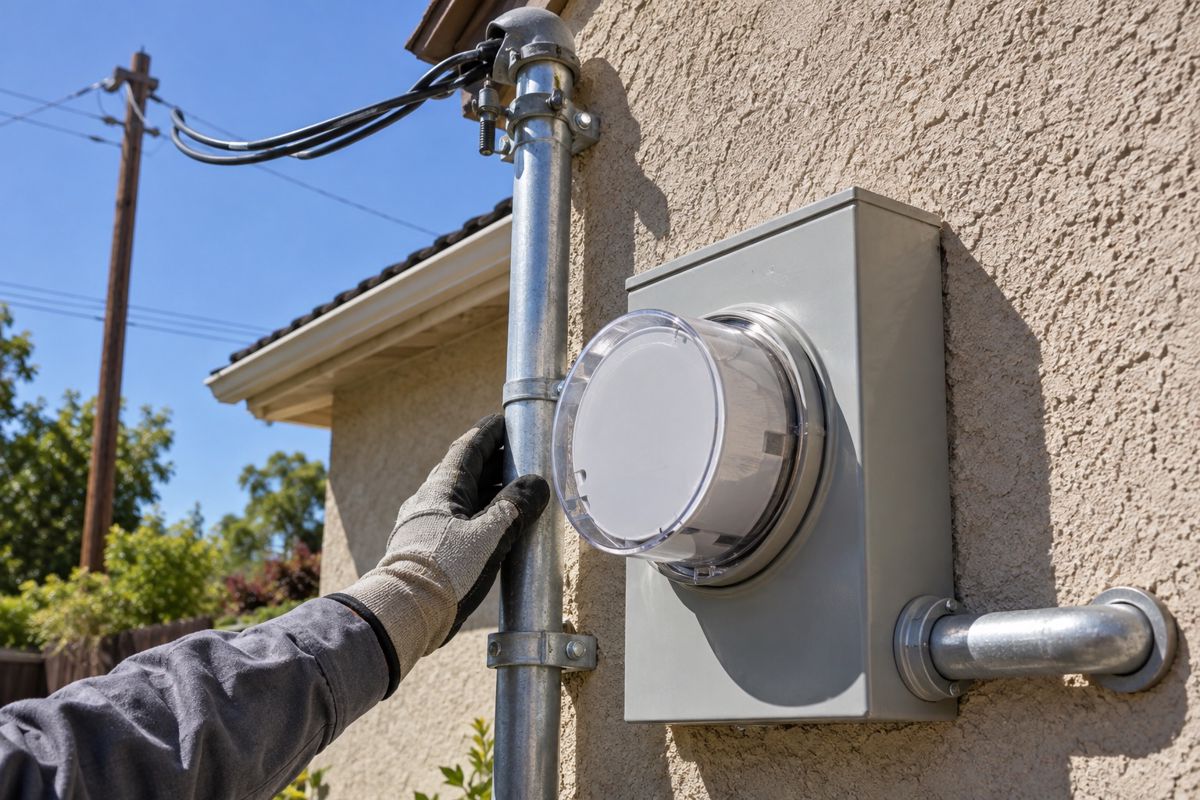
If the existing meter base and service mast are in good shape and the new panel simply replaces the old one in the same spot, the job stays near the lower end. A new mast, a new meter socket or an underground service that needs trenching can add noticeably to the total.
Panel location
A panel mounted on an outside stucco wall or in a garage is easier than one buried in a finished wall or a closet. Relocating a panel means new wire runs and wall repair, and it costs more than replacing it in place.
Condition of the wiring
When the panel comes out, the electrician often finds old splices, cut-short wires or aluminum branch circuits behind it. Some of that has to be fixed for the new panel to pass inspection. Homes from the 1950s through the 1970s are more likely to need this extra work.
Extras
Whole-house surge protection, a subpanel for a garage or an addition, a connection point for a battery or generator, and extra circuits for an EV charger all add materials and time.
Do I really need 200 amps?
Not everyone does, and a good electrician will tell you if you do not. Older Sacramento homes were often built with 60 or 100 amp service when the biggest loads were a stove and a window air conditioner. Today many households run central air, an electric dryer, a home office and sometimes a pool pump.
An electrician can do a load calculation to see how much your house really uses and compare it with the service size. Signs that you may need more capacity include breakers that trip often in summer, lights that dim when the air conditioner starts, no space left for new breakers, and plans for solar, a battery, a heat pump or an EV charger. If you only need a little more room, a smaller upgrade or a subpanel may be enough. If you are planning several big additions, 200 amps is a sensible target.
What do permits, SMUD and inspections add?
Panel changes almost always need a permit from the city or county, and the work has to pass an inspection. Fees and steps differ by jurisdiction, so ask your electrician what applies at your address.
Utility coordination matters too. Most of Sacramento is served by SMUD, and some nearby areas are served by PG&E, so check your bill to see which one is yours. When the meter or service connection changes, the utility generally has to disconnect and reconnect power, and their schedule is not something an electrician controls. That is one reason timelines vary.
None of this is a reason to avoid permits. An inspection is a second set of eyes on work that sits at the center of your home's safety, and unpermitted work can cause trouble with insurance and when you sell.
How long does the work take, and will the power go off?
Many straightforward upgrades take about one working day. Power is off for several hours while the old panel comes out and the new one goes in. Plan to run without air conditioning, which is worth thinking about in July, and move anything out of the way in front of the panel.
Jobs with a new service mast, trenching, wall repair or utility scheduling can take longer, sometimes over several days. Ask for a realistic window and what could change it, rather than a promise of a specific hour.
How do I compare quotes?
A low number on its own tells you little. Ask each electrician to put the following in writing so you can compare line by line:
- The size of the new panel and the number of circuits
- Whether the meter socket and service mast are included or not
- Who pulls the permit and who handles inspection and the utility visit
- What happens if hidden wiring problems turn up, and how those extras are priced
- What is covered for drywall or stucco patching
Also ask to see a California C-10 electrical contractor license, and check its status on the state contractors board website. Ask about insurance as well. Both are advice for you to check on any electrician you consider.
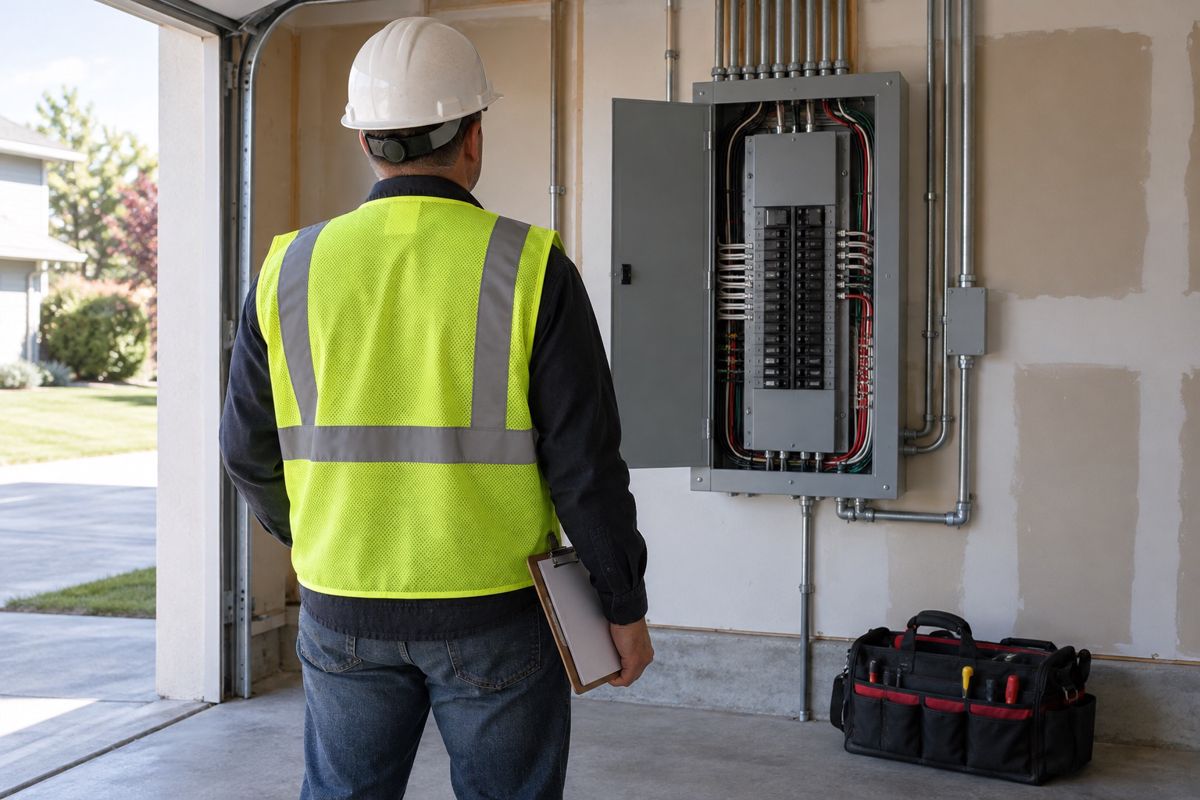
Be careful with quotes that are far lower than the others. They may leave out the permit, the meter work or the patching, and then the extras arrive after the job starts.
What should I do next?
Start with a look at your panel. Note the amp rating printed on the main breaker, the brand, how many free spaces there are, and any signs of heat, rust or buzzing. Write down what you plan to add in the next few years, such as solar, a battery, a heat pump or a charger. Then ask for a written quote that covers the whole job.
If you want to know what a panel upgrade involves for your home, see our electrical panel upgrade page. If your wiring is the bigger worry, our rewiring page explains the next level of work. If something is sparking, buzzing or smells hot right now, treat it as urgent and call an electrician at once.